


|
Getting your Trinity Audio player ready...
|
The cases around deepfakes and the workplace are growing. Here’s what HR needs to know.
By Julie L. Werner, Bryan Sterba, and Bernadette L. Darcy
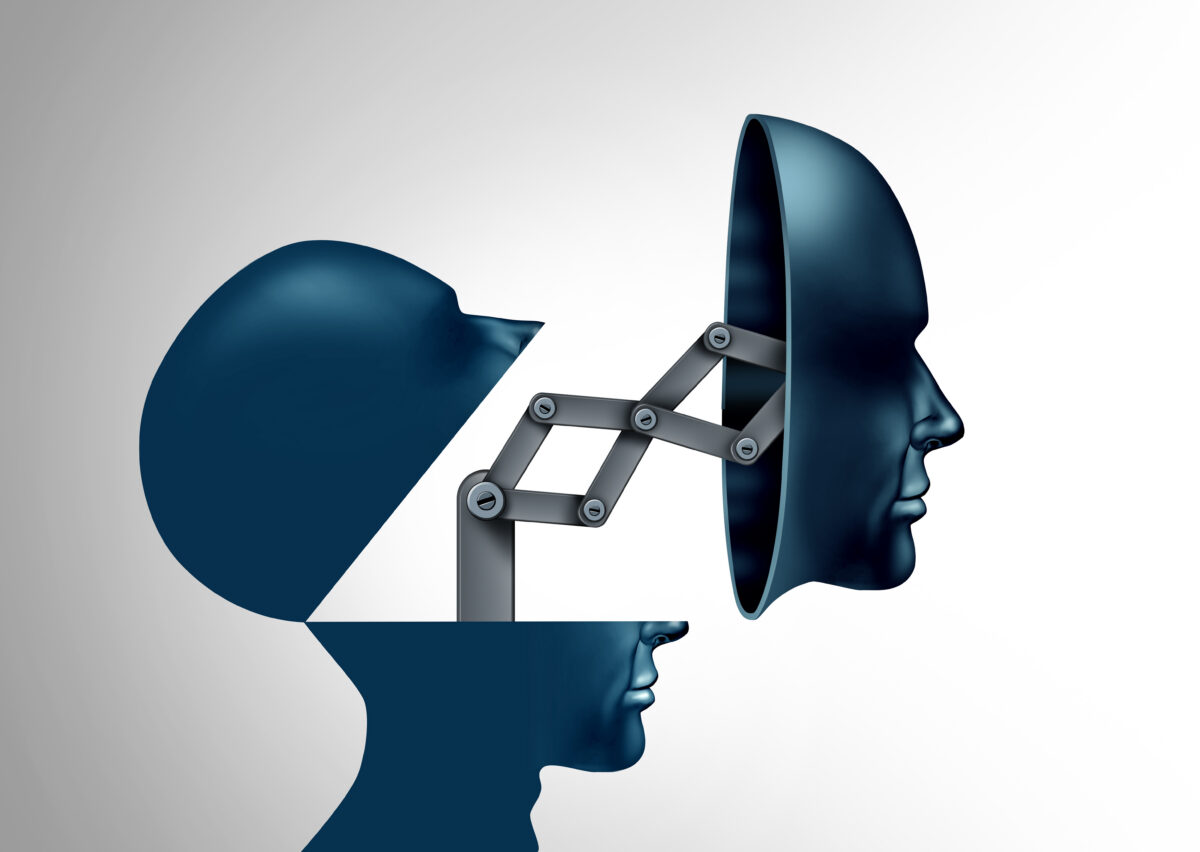
With a few clicks of a mouse or taps on a keyboard, anyone can create convincing deepfakes: AI-generated videos, images, or audio that mimic real people and situations. Deepfakes depicting explicit and intimate content are on the rise, including in the workplace, where they might be shared among employees. Given this increasing phenomenon, HR professionals should take proactive steps to prepare their organizations to respond to deepfakes and other AI developments.
Deepfakes and Employment Litigation
The Equal Employment Opportunity Commission (EEOC) has warned against the use and circulation of deepfakes at work. In its “Small Business Fact Sheet: Harassment in the Workplace,” the EEOC explained that sharing deepfake and other AI-generated images and videos could constitute harassing conduct based on legally protected characteristics.
Employees who have experienced alleged deepfake exploitation at the hands of their co-workers or in the workplace have sued their employers, alleging they are liable for a hostile work environment, harassment, and discrimination under Title VII of the Civil Rights Act of 1964 and other applicable state laws.
For example, five employees at a global non-profit sued their employer in Minnesota alleging the employer had created a hostile work environment and should be liable for sexual harassment, sex discrimination, negligent retention and supervision, and other claims arising from their superior’s alleged creation of explicit deepfakes depicting the employees (Doe One et al. v. The Nature Conservancy et al., Case No. 24-cv-1570, D. Minn. 2024). The employees alleged their co-worker took their photos while at work and used those photos and pictures from the plaintiffs’ social media profiles to create sexually explicit deepfake photographs and videos of the employees. The case ultimately settled.
Similarly, a Washington State Patrol trooper sued his employer alleging a pattern of discrimination and harassment stemming from the circulation of a deepfake video depicting him and a co-worker (Pearson vs. State of Washington, Case No. 25-2-14024-1, Wash. Super. Ct. 2025). The plaintiff, who identifies as gay, alleges that in the video, two uniformed troopers are shown engaging in intimate kissing, while an audible voice states, “this is SWAT training, no homo.” The plaintiff claims numerous troopers circulated the deepfake and fostered a hostile work environment in violation of Washington state law. He asserts that his employer should have taken steps to end the video’s dissemination, which it failed to do. The case is ongoing.
Furthermore, a Tennessee meteorologist sued her former employer alleging that its response was inadequate to the circulation of deepfakes portraying her in a sexually explicit manner (Friedrichs v. Scripps Media, Inc., Case No. 3:25-cv-01494, M.D. Tenn. 2025). Among other allegations of gender discrimination, verbal abuse, demeaning physical objectification, and retaliation, the plaintiff alleged her employer failed to fulfill its legal obligations to discipline the employees who had circulated the sexual deepfake images of her. She alleges her employer downplayed her concerns about the deepfakes and did not take action to help her. The lawsuit is ongoing.
In all three cases, the employees alleged their employers failed to adequately address the creation and dissemination of deepfakes.
Relevant Laws and Regulations
HR professionals should be aware of both enacted and proposed legislation regarding deepfakes, including the enacted “Take it Down Act” and proposed “DEFIANCE Act.”
The “Take It Down Act,” Congress’s first comprehensive response to deepfake abuse, was signed into law on May 19, 2025. The Act criminalizes the knowing publication of intimate visual depictions, including AI-generated “digital forgeries,” of identifiable individuals without their consent. The Act defines “digital forgery” as any intimate visual depiction created through software, machine learning, or artificial intelligence that a reasonable person would view as indistinguishable from an authentic depiction. Penalties include up to two years of imprisonment for offenses involving adults and up to three years for those involving minors. The Act requires online platforms to implement a notice-and-takedown system that allows victims to request removal of nonconsensual intimate imagery within 48 hours. Takedown systems must be in place by May 19, 2026.
While the “Take It Down Act” provides a mechanism for removing deepfakes and imposes criminal penalties, the “DEFIANCE Act” (Disrupt Explicit Forged Images and Non-Consensual Edits Act) focuses on providing victims of deepfake abuse with civil remedies. In January 2026, the Act unanimously passed the Senate, and it is pending before the House of Representatives. If enacted, the “DEFIANCE Act” would allow victims to sue deepfake creators and distributors for up to $150,000, or up to $250,000 if the deepfake was created in connection with sexual assault, stalking, or harassment. The Act would also allow plaintiffs to recover attorney’s fees and enable them to file under pseudonyms.
States also have enacted legislation targeting deepfakes. For example, in New York, a person may be held criminally liable for the unlawful dissemination or publication of an intimate image when they intentionally disseminate or publish a deepfake depicting explicit sexual acts or intimate content. 1 In Florida, “Brooke’s Law” allows individuals to compel social media platforms to remove harmful, non-consensual sexual deepfakes.
Further complicating matters for HR professionals, President Trump signed an executive order in December 2025 establishing a national policy framework for artificial intelligence that puts additional pressure on the already fragmented landscape of state AI regulation. Although the executive order does not itself invalidate state laws, President Trump directed federal agencies to pursue litigation, rulemaking, and funding conditions aimed at limiting or displacing state requirements that are deemed inconsistent with federal policy objectives. As a result, the ultimate enforceability of certain state deepfake and AI‑related statutes may turn on evolving federal agency actions and court decisions applying constitutional and preemption doctrines, including conflict and obstacle preemption. Until those issues are resolved through litigation or formal federal regulation, employers and HR professionals must navigate a period of legal uncertainty in which state laws may remain in effect but face potential federal challenge or invalidation.
Practical Recommendations for HR Professionals
Employers should review and update workplace policies to address the creation and distribution of deepfake content, making clear that such behavior constitutes serious misconduct, violates company harassment policies, and may be grounds for termination.
HR professionals also should be trained to swiftly respond to deepfake-related complaints. Employers should ensure that incident response protocols include evidence preservation, employee support, and coordination with legal counsel. If the deepfake’s creator is identified as another employee, HR should promptly investigate, gather relevant evidence, and interview all parties and any witnesses, ultimately taking prompt correct action to remediate the situation. If a manager or supervisor learns of a deepfake complaint, he or she must immediately report the complaint to HR.
While HR professionals may be limited in their own ability to remove content online, they should inform employees of their rights under the “Take It Down Act” to request the removal of deepfakes posted online. In addition, HR professionals can work with their IT teams to try to limit circulation of these materials on company networks or systems.
While one’s natural reaction these days might be to solicit further legal advice about the situation from an AI resource like ChatGPT, companies should also realize that an individual’s communications with an AI chatbot are not protected from discovery by the attorney-client privilege. In a recent federal case in New York, the court held that searches on Claude AI’s chatbot were discoverable in litigation.
By updating workplace policies, training staff to respond effectively to deepfake incidents, and remaining informed about evolving laws and seeking legal advice from experienced employment counsel when issues arise, employers can mitigate legal risk and foster a safer work environment.