


Worker Confidence Index: Monthly Analysis 2026
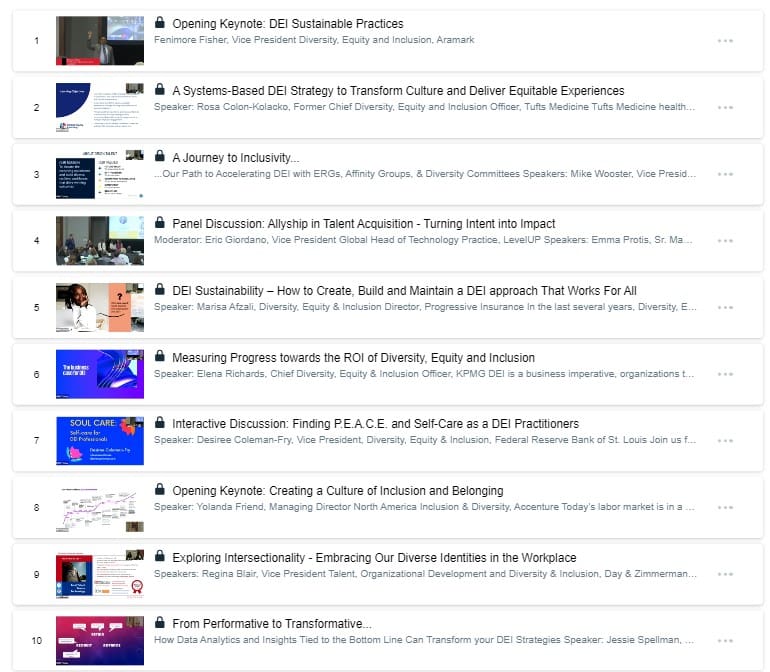
The Worker Confidence Index (WCI) report examines changing attitudes and perspectives of the American worker. However, HRO Today‘s traditional WCI report is based on quarterly findings, found here, through extensive online interviews of workers. Since the US economy and labor market have been markedly volatile and ever-changing, HRO Today is publishing shorter, monthly updates to the WCI to further examine the root cause behind quarterly changes and shifts in worker attitudes. This research is sponsored by LevelUP HCS. September 2026: In September, the WCI increased by 2.3 points to 101.2. This marks the fourth time the overall WCI reached over 100, which only occurred three times in 2025. Most of its indices increased from August as expectations of a raise grew the most, by 3.8 points to 103.1. American workers are less likely to expect a promotion, the only index to decrease, though recently high levels indicate workers could have recently received a promotion, which naturally leads to lower levels. Overall, workers are feeling more confident within their current positions. Though worker confidence increased overall, Americans are feeling significantly less confident in current and future business conditions and labor market growth. Both the Conference Board’s Present Situation Index and
Global Labor Market Unemployment Report – Q2 2026
2026 Q2 Global Labor Market By Alexis Voglino-Whyte What is the state of the job market? Globally, unemployment levels decreased in several major economies, including China, Germany, and Brazil. Job growth stalled as companies opt to heavily invest in AI technologies and trade-dependent economies are hesitant to expand their workforces. What is impacting the global economy? Global growth is relatively stagnant amid trade disputes, supply chain disruptions, and rampant inflation amid high energy prices. Tech-related investments and demand continue propelling growth. However, an unstable geopolitical environment will further negatively impact overall global growth. Regional Overview: North America: In the United States, economic growth was fueled by business investment and tech-related imports. Job growth was minimal, with only 231,000 jobs added in the second quarter, compared to 308,000 in the first quarter. The healthcare sector led job growth while job growth in the federal government and hospitality sectors declined. Canada’s GDP expanded by 3.4% at an annualized rate in the second quarter as trade bounces back. Unemployment was unchanged at 6.7% as 88,000 jobs were added, primarily in healthcare and hospitality. Asia-Pacific: As most of the region is still unaffected by high energy prices, growth predictions for the year stayed at

Human Resources New Technology Quarterly Summary: Q2 2026
Year-round, the HR space develops and funds new technologies. This quarterly report provides monthly updates to track movement within the HR technology sector and the innovation they bring. For a successful and future-ready global workforce, HR technology announcements should reflect labor market needs and provide critical information about shifts in the HR space. By Alexis Voglino-Whyte Key Takeaways: Worldwide venture capital activity was over $200 billion, down from last quarter. HR technology saw over 113 total announcements, about half of which were for new products. Total investment in HR technologies decreased. Overall, there were only two funding announcements over $100 million, though both rounds were for $150 million or less. The largest funding round of $150 million went to a Europe-based HCM provider. 2026 Q2 Venture Capital Activity and HR Technology Investments Globally, over $200 billion was invested throughout all industries, down from $330 billion invested last quarter. Though investments were again concentrated within technology, cybersecurity, and AI-based companies, other industries are expected to see a spike in investment. In HR, over $657 million was invested, a significant decrease from over $1.3 billion in the first quarter. Following Q1’s boom in investment, the number of announcements grew from 86 to

Worker Confidence Index: Second Quarter 2026
Second Quarter 2026 Worker Confidence Index By Alexis Voglino-Whyte What is the Worker Confidence Index? The Worker Confidence Index (WCI) measures and evaluates employee attitudes, confidence levels in upwards mobility and pay increases, and overall security within their current positions. Unlike other indices, the WCI addresses the employee perspective through extensive online interviews among US-based workers that are 18 and older. The WCI tracks job security, trust in company leadership, the likelihood of receiving a raise, and the likelihood of receiving a promotion. Using these performance indicators, the WCI shows the changing attitudes of workers and how this could impact the quality of their contributions. Q2 2026: What’s the state of the current labor market? Unemployment averaged 4.2% as the number of job openings, hires, and total separations are relatively unchanged. Only 344,000 jobs were added throughout the second quarter of 2026 compared to over 460,000 added in the second quarter of 2025. Amid high levels of inflation, the Federal Reserve opted to keep rates steady for the second consecutive quarter. Short-term yields are expanding, complicating action and long-term progress. The US stock market experienced strong growth. The S&P 500 and Nasdaq 100 both recorded their best quarter since Q2’2020.

Global Labor Market Unemployment Report – Q1 2026
2026 Q1 Global Labor Market What is the state of the global labor market? Slow job creation, geopolitical instability, and waning consumer demand continue weakening the international labor market and global economy. Unemployment was mostly stagnate as any significant job growth was focused in export-heavy economies. What is impacting the global economy? Several tariff-impacted countries made international trade deals to help boost consumer spending amid a slowing global economy. The resounding repercussions of the US-Iran conflict include high inflation, downwardly revised growth predictions, and low levels of consumer spending worldwide. Regional Overview: North America: In the United States, growth was downwardly revised to 1.6% as government spending and exports led growth, though inflation rose to 3.3%. Unemployment fluctuated around 4.4% as healthcare and construction drove job growth. Canada, by definition, entered a technical recession as the economy contracted. Though unemployment was mostly unchanged at 6.7%, over 140,000 jobs were shed throughout the first quarter. Asia-Pacific: Consistent growth in technology-related production and exports continue to fuel the region’s growth. Fluctuating consumer spending is slowing growth in China as unemployment edged up. Japan’s economic growth of 1.8% was fueled by exports and private consumption. In India, unemployment rose amid nearly record-high youth
Exclusive Report | AI and the Rise of the Supergeneralist
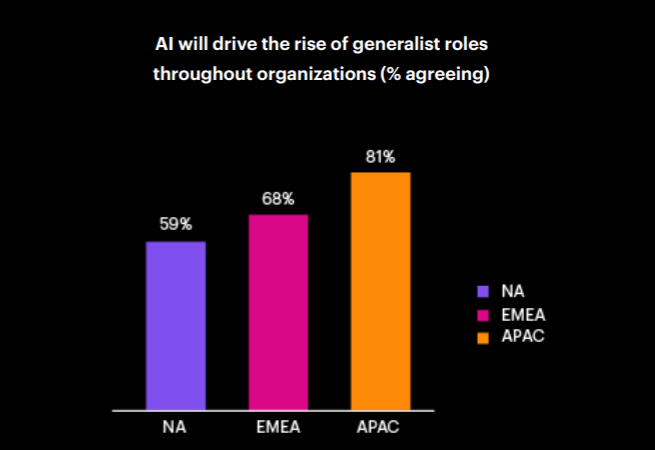
Future of Work and the Rise of Supergeneralists By Larry Basinait, Executive Vice President, Marketing & Research, HRO Today Artificial intelligence is reshaping the future of work, and with it, the definition of talent. As organizations adapt to rapid technological change, workforce strategies are evolving away from narrowly specialized roles and toward a new kind of professional: the Supergeneralist. Our latest research reveals that organizations increasingly value professionals who can adapt across disciplines, connect ideas, and apply strategic judgment in ways AI cannot replicate. While AI excels at processing information and automating tasks, human versatility, creativity, empathy, and contextual decision-making are becoming the true differentiators in the modern workforce. The report explores how HR and talent leaders are responding to this transformation and what organizations must do to remain competitive in an AI-augmented economy. From workforce planning and talent acquisition to learning, organizational design, and leadership development, the findings point to a future where adaptability is the new currency of career success. Key insights from the research include: 65% of HR leaders worldwide believe AI will increase demand for generalist roles. Organizations are prioritizing learning agility, cross-functional collaboration, and strategic thinking over narrow technical specialization. Soft skills such as emotional

Human Resources New Technology Quarterly Summary: Q1 2026
Year-round, new technologies are developed and funded within the HR space. This quarterly report provides monthly updates to track movement within the HR technology sector and the innovation they bring. For a thriving global workforce, HR technology announcements should reflect labor market needs. Key Takeaways: In the first quarter of 2026, worldwide venture capital activity hit over $330 billion, more than doubling funding from the last quarter of 2025. HR technology received 86 total announcements, 80% from the US alone as activity from the APAC and Latin America regions waned. Total investment in HR technologies was up. Overall, there were three funding announcements over $100 million. The largest funding round was for Vensure Employer Solutions, a US-based workforce solutions and benefits provider. 2026 Q1 Venture Capital Activity and HR Technology Investments Global funding hit over $330 billion, primarily focusing on AI-based startups and US-based companies. US-based companies received over $267 billion in funding as ten companies raised over $2 billion each and there were four megadeals, all over $10 billion. Although this was the best quarter for funding since 2021, investors will be increasingly cautious following geopolitical tension. In HR, venture capital activity grew to nearly $1.4 billion. Of the

Worker Confidence Index: First Quarter 2026
What is the Worker Confidence Index? The Worker Confidence Index (WCI) measures employee attitudes, confidence levels, and overall security in their jobs. Unlike other indices, the WCI addresses the employee perspective through extensive online interviews among workers in the US that are 18 and older. The WCI tracks job security, compensation expectations via the Likelihood of a Raise index, career mobility via the Likelihood of a Promotion index, and trust in company leadership. By tracking these performance indicators, the WCI can show the quality of contribution workers will make. Q1 2026: What is impacting the labor market? Unemployment edged up to 4.4% as nearly 170,000 jobs were added in March. However, layoffs rates are steady and downward job revisions have been common. The Federal Reserve is opting to keep rates steady, for now. Economists expect one rate cut this year. Additionally, the US stock market had its worst annual start since 2022. The S&P 500 and Nasdaq 100 both fell. The US Consumer Confidence Index® is still remarkably low, mirroring falling levels of consumer spending. As prices continue to rise, consumer spending is predicted to fall to 2.7% this year. Overview of the Worker Confidence Index: Overall, the WCI increased

2025-2026 CHRO Compensation: The Minority Report
2025-2026 CHRO Compensation: The Minority Report Research by Alexis Whyte As part of the 2025 CHRO Compensation study, HRO Today surveyed HR executives from North America and EMEA, asking questions that cover racial and ethnic minority groups’ compensation and representational diversity within the workforce, and compiled publicly available CHRO compensation data. This information was used to expand upon the CHRO Compensation Report, adding context and insights to compensation trends and shifts from a racial and ethnic minority perspective among senior HR leaders. Overall, HR is becoming increasingly impactful to company performance and metrics. HR’s top position, typically the CHRO, is now a crucial part of the C-Suite. With higher levels of responsibility, HR executive compensation should accurately reflect the industry’s growth. But how do HR executives feel about their compensation compared to their growing roles? And how do these insights change with company size, perceived levels of representational diversity, and comparability, or fairness, in compensation by race or ethnicity? The Impact: Several studies show diversity within the workforce leads to more inclusive practices, higher employee retention, and better overall financial success. However, as some US-based companies repeal their DEI initiatives, the perceived importance and value of representational diversity could shift,