


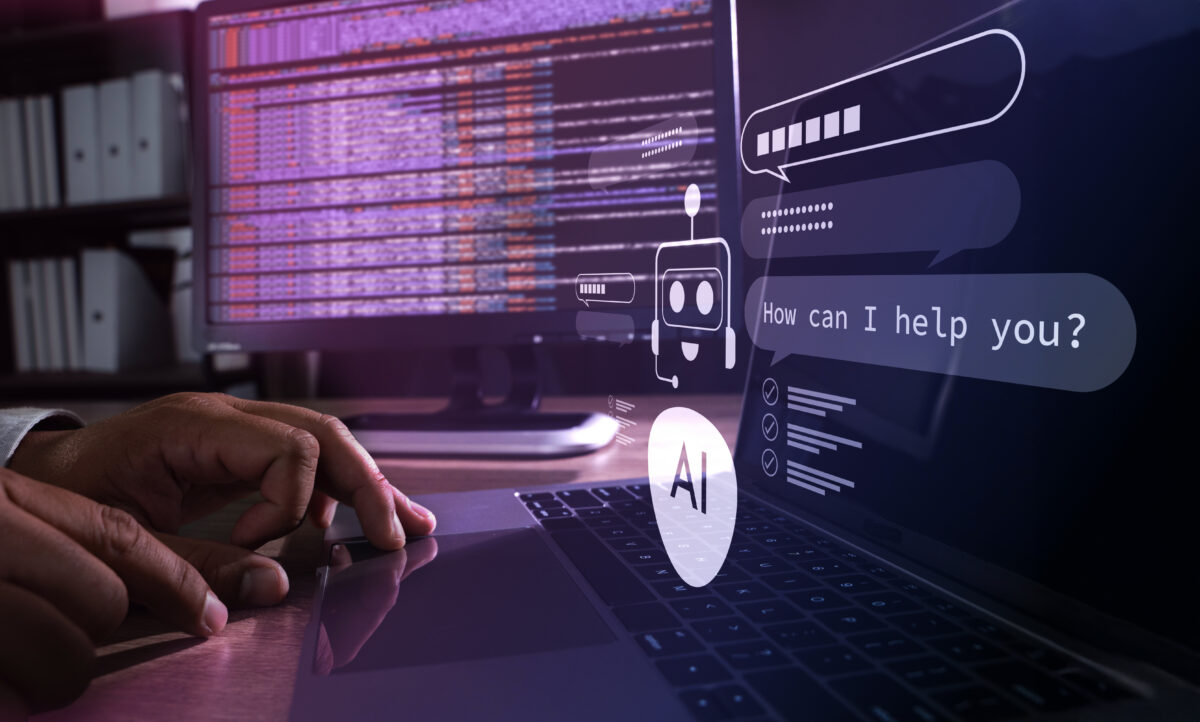
Faced with an unpopular performance review process, the firm deployed a personalized AI assistant to level the playing field for career development.
By Gillian Manning
In a matter of months, an AI-powered coach named Ted has transformed the internal culture at Fortitude Re. Launched in January 2026, the custom digital tool has already become a critical fixture for 30% of the company’s workforce, according to Amanda Stewart, senior vice president of employee experience.
“Every colleague at every level deserves a thinking partner,” she says. So, Stewart provided colleagues with a tool to overhaul a performance review process they had described as “inconsistent, box-check, rushed.” And the initial results are in. “Now we’re hearing ‘meaningful, impactful, successful.’ That’s a distance we’ve traveled in less than six months,” Stewart says.
The need for change became clear after a comprehensive listening assessment in 2025. Fortitude Re runs a $100 billion book of business with a staff of 550 people. With 150 people managers, the assessment showed the company was juggling as many different interpretations of career development.
One in three employees openly felt the legacy review process lacked fairness, clarity, and transparency. Only 41% understood how their daily work connected to company objectives, and a mere 48% understood how their performance rating actually impacted their pay. Managers were simply too busy or lacked the coaching expertise to guide their teams, Stewart explains.
“We didn’t have a technology problem, we had a culture and consistency problem,” Stewart says. Thus, Fortitude FIT (“Feedback Ignites Talent”) was born. Fortitude FIT is a continuous performance framework co-created with employees over the course of a year and launched in early 2026. Moving away from traditional, event-driven annual ratings, FIT treats professional growth like physical fitness—requiring ongoing habits, regular sync-ups, and consistent real-time coaching throughout the year.
Ted was built directly into this new ecosystem to scale coaching capacity. Deployed using OpenAI’s GPT framework, Ted acts as an in-house expert on internal company methodologies, including DiSC communication styles, “radical candor” feedback, corporate rating scales, core values, and job architecture. Because the tool is accessible to everyone, it levels the playing field. Individuals can use it to prep for major career conversations, managers for tough discussions, and peers before providing feedback.
“Ted doesn’t have the conversation, your people do,” Stewart explains. “Ted just makes sure that they walk into that conversation ready.”
While Ted provides tailored scripting ideas and conversation starters, employees are explicitly instructed never to copy and paste its outputs. “AI is a tool, not your voice,” Stewart emphasizes.

Senior Vice President of Employee Experience
Fortitude Re
“The performance review process was once described as “inconsistent, box-check, rushed. Now we’re hearing ‘meaningful, impactful, successful.’ That’s a distance we’ve traveled in less than six months.”
Security protocols are also designed to protect internal workflows. “I have Ted really locked down,” says Stewart. “He basically will not pull things from the internet; he will only pull from information that I’ve given him.”
The assistant automatically deflects unauthorized topics like compensation. And, if Ted flags interactions indicating severe employee distress, an automated alert is triggered directly to the chief people officer to ensure immediate human care and intervention.
To help disseminate the tool, leadership avoided any requirements that employees use it—instead, they let the tool spread naturally. “We didn’t mandate Ted,” Stewart says. “We let him spread organically to all 12 departments, and that supported adoption.”
The organic approach paid off. According to the company’s April 2026 AI usage report, Ted is actively utilized by 165 colleagues and drives a dominant 41% of all custom AI activity in the organization. An internal pulse survey also revealed that 92% of users experienced increased confidence in performance conversations, 92% reported substantial time savings, and 82% received clearer, more specific feedback.
Looking ahead, Fortitude Re plans to track long-term retention data via follow-up 360 assessments and is already evaluating a transition into Claude co-work use cases. For Stewart, the core lesson remains definitive: tech only works when culture comes first. “Without a framework, it’s just noise,” she says.