



|
Getting your Trinity Audio player ready...
|
Our latest research reveals how people leaders are navigating rapid AI acceleration, persistent talent gaps, and escalating internal burnout with adaptive workforce strategies.
By Debbie Bolla
Research by Larry Basinait
Pressures are mounting for CHROs: Rapid AI acceleration, persistent skills shortages, shifting employee expectations, and HR burnout are some of their main challenges, according to HRO Today’s 2025-2026 Top Concerns of CHROs study. These issues require HR leaders to take a more agile approach to workforce management, navigating constant change and uncertainty with strategic focus and adaptability. Here, a roundup of CHROs share their advice on how they are addressing these concerns in order to stay ahead in a challenging time.
TOP CONCERN: LACK OF SKILLS
This year’s study finds that more than half (52%) of senior HR leaders are concerned about the availability of skilled workers. A lack of skills equates to a very real talent shortage felt across industries—one that calls for a pivot in strategy.
“The talent shortage has pushed our owners and our national support team to take a hard look at what we’re offering and whether it genuinely resonates with today’s workforce,” explains Sarah Dietz, VP of human resources for Interim HealthCare, a leading home healthcare agency. “The demand for home healthcare talent isn’t slowing down, and caregivers know they have choices. That means we can’t rely on quick fixes or transactional hiring.”
Instead, Dietz says Interim HealthCare is very intentional in all their practices, from hiring and training to engagement and retention. “Career development, thoughtful onboarding, and providing realistic career pathways matter more than ever,” she says.
Jamey Dubke, VP of HR of American Health Staffing Group, feels a similar talent strain. “In healthcare staffing, the talent shortage isn’t a cycle we’re waiting out. It’s the water we swim in every day,” she says. “Once you accept that, you stop treating hiring as a pipeline problem and start treating it as a capability problem.”
Her solution? A shift toward a skills-based view of the organization. “We’re breaking roles down into the skills that genuinely drive performance, which lets us hire for adjacent capability and build the rest. Waiting for a perfect-match candidate in this market is a strategy that ends in an empty chair.”
Raquel Elejabarrieta, chief human officer of Grupo Eulen, agrees that market conditions have caused a redesign of their approach. As a service company providing support in cleaning, security, maintenance, and auxiliary services, HR has to not only find skilled talent, but also individuals who are reliable, adaptable, and customer-focused in fast-paced environments.
“The ongoing talent shortage has shifted our focus towards an applicant’s availability and potential, rather than whether they meet every technical requirement,” she says. “As a result, L&D now plays a more critical role. We are investing in strong onboarding and engagement initiatives, while equipping employees with essential skills through programs such as basic language training and access to a state-of-the-art LMS.”
Anat Keidar, CPO of DoorLoop, also recently experienced a mindset change. “We stopped treating the talent shortage as a hiring volume problem. It isn’t one. The answer isn’t to recruit harder; it’s to recruit differently.”
For DoorLoop, AI tools are leveraged in the early stages of the candidate funnel for sourcing, screening, scheduling, and first-pass assessment. This allows recruiters to focus their time on outcomes-driven work, like executive selection and candidate experience.
TOP CONCERN: UPSKILLING
As the availability of skills remains a challenge, upskilling workers is another area that is critical in order to keep up with the pace of change. This year’s report finds that 38% of respondents have made moderate progress with their upskilling efforts.
“Upskilling is key for us. In the service industry, we constantly look for ways to improve efficiency without compromising the quality of service,” says Elejabarrieta. “This makes it critical for our employees to continuously learn new and enhanced skills to perform their current roles better.”
The company’s approach includes several layers of training with strong follow-up and consistency so employees can become true experts in their positions and feel confident making decisions on the ground.
A little more than half (51%) of respondents report making limited to no progress when it comes to their upskilling efforts. Dubke says that upskilling programs can stall if the focus is merely information transfer.
“We front-load the why—why this matters to you and your future—before we ever touch the how. When team members see a new skill as part of who they’re becoming rather than a box to check, the adoption curve looks completely different,” she says. “The other thing that’s working is pairing formal learning with immediate application. A skill that isn’t used within about 48 hours of being learned decays quickly.”
For example, at American Health Staffing Group, HR is designing experiences for its AI enablement rollout around Microsoft Copilot and Hone AI Coach, where the practice environment and the work environment are the same to improve adoption.
Dietz agrees that efforts around upskilling are most successful when they are repeated and reinforced. “Upskilling only sticks when it’s reinforced by the right culture—one that values learning, support, and reminds people that the work they do truly matters to patients and families,” she says.
TOP CONCERN: HR BURNOUT
Fatigue and burnout across the HR function remain issues on the rise, with 80% as extremely or very concerned about it, up nine percentage points from last year.
“HR teams face constant pressure,” says Elejabarrieta. “To manage this, we are simplifying wherever possible. This means cutting unnecessary processes, using technology to reduce administrative work, and focusing only on what truly drives the business.”
Dubke agrees that organizations need to consider and rethink processes when seeing increases in stress and burnout. “HR burnout isn’t primarily a wellness problem,” she says. “It’s a work design problem.”
Dubke and the HR team are using AI and automation to offload some of the transactional and administrative work that has always been a part of the job that can be easily handled by new tools.
“Freeing our people from it lets them spend their time on the strategic advisory work that actually energizes them. Burnout accelerates when people feel their work doesn’t matter. Repositioning HR as a strategic partner that understands how the business makes money and solves business problems through people is a psychological intervention as much as a strategic one,” she explains.
TOP CONCERN: AI
Over the last few years, the use and impact of AI have been examined in this report. This year, more than three-quarters of respondents use AI, up from 40% in 2023. With adoption rates soaring, strategies around AI must be addressed.
“We’re treating AI adoption as a behavior change problem first and a technology problem second. The tools aren’t the hard part. The psychology around them is: the quiet fear of obsolescence, the uncertainty about how to use them well, the assumption that asking for help signals weakness. Ignore those, and no rollout plan will land, no matter how good the training content is,” Dubke explains.
Keidar agrees. “We treat AI as an operating model question, not an HR project. That distinction matters,” he says. “In practice, it means classifying every function as AI-owned, AI-augmented, or human-owned, and revisiting that classification regularly with the executive team. It’s not a one-time exercise. It’s an ongoing conversation.”
Elejabarrieta says Grupo Eulen is experiencing several benefits from adoption. “AI is helping us manage scale and speed up our frontline operations, particularly in recruitment screening, scheduling, and workforce planning. These tools allow us to respond faster and operate more efficiently, especially when scheduling and ensuring we have the right number of employees,” she says.
She is also careful to point out that their company’s frontline service is fundamentally human. “Our approach is to use AI to support employees, not replace them. Our focus is on introducing AI in practical, manageable ways so our teams can adapt to new ways of working with confidence.”
Dietz says the nature of their work—caregiving—is also human at the core, so they are “intentional” in their decisions around AI adoption.
“Our goal isn’t to replace the human side of this work, it’s to protect it. Right now, where I think AI helps us most is reducing administrative time. When franchisees automate documentation, scheduling, or other tactical tasks, they create more space for what actually matters: meaningful, human-to-human time. That’s true for caregivers spending more time focused on patients, and it’s true for our HR and other operational teams being able to work on strategy and innovation instead of paperwork,” she explains.
With a greater level of adoption of AI comes a greater level of employee anxiety around AI. HR leaders are often at the helm of AI strategy and adoption, so transparency and communication fall into their laps as well.
“With the workforce, the most underrated tool is transparency. Telling people which parts of their roles are likely to shift, what we’re investing in to help them grow, and where headcount isn’t going to scale. People can handle honest information. What they can’t handle is uncertainty with no context,” shares Keidar.
Dubke agrees that transparency is key. “On the broader workforce transition, the most important thing HR can do right now is tell the truth. AI will change roles. It will eliminate some tasks. It will create new ones. Pretending otherwise erodes trust faster than any failed rollout ever could,” she says. “What we owe team members is clarity about how the organization plans to invest in them through the change, a real path to build the new capabilities, and honest conversations about where the work is actually going.”
About the Experts

VP of HR
Interim HealthCare

VP of HR
American Health Staffing Group

Chief Human Officer
Grupo Eulen
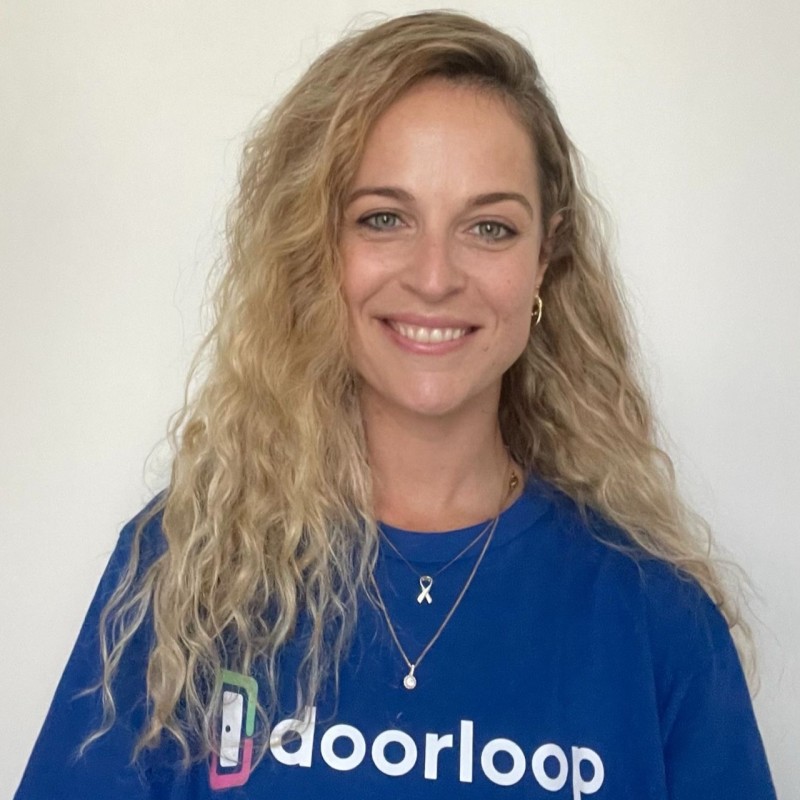
Chief People Officer
DoorLoop