



These strategies help build a “leadership factory” in order to create a sustainable pipeline of talent capable of navigating industry disruption.
By Ruchi Ahluwalia
In today’s environment of relentless disruption, leadership development can no longer be treated as a functional capability or a periodic intervention. For organizations operating at scale across geographies, cultures, and complex business models, it has become a strategic lever for continuity, resilience, and long-term value creation.
As enterprises navigate rapid technological shifts, changing workforce expectations, and evolving market dynamics, the real challenge is not merely building leadership capability, but ensuring leadership continuity. This requires systems that preserve institutional strengths while deliberately preparing leaders to operate in an uncertain, AI-augmented future.
Moving from Episodic Training to Leadership Systems
Traditional leadership programs, while well-intentioned, often remain fragmented and focused on skill acquisition rather than sustained leadership readiness. What future-ready organizations need is a structured, multi-tiered ecosystem that builds depth across roles, functions, and regions—one deliberately designed to produce not just capable leaders, but future leaders equipped to carry the organization through complexity and change. This is where the CPO’s impact becomes most tangible. Through constant upskilling, CPOs create the conditions for leadership continuity at scale.
The most progressive organizations today are moving beyond episodic training towards “leadership factories”: structured ecosystems that weave together external expertise, peer learning, and live business problem-solving to develop leaders continuously and at scale. These systems are built on a foundational belief that change is not a disruption to be managed, but an opportunity to be embraced. When upskilling is woven into the rhythm of the organization, it fosters a culture of innovation and collaboration, one where psychological safety is the norm, silos dissolve across functions and geographies, and people develop the agility to meet shifting demands without waiting to be led through them.
A people strategy grounded in these principles empowers leaders at every level to navigate complex challenges, regulatory pressures, technological shifts, and evolving workforce expectations with both clarity and conviction. Such an approach strengthens organizational agility by creating a continuous pipeline of leaders aligned to shared values yet equipped to respond to local and contextual realities—reducing over-reliance on external hiring and reinforcing cultural continuity from within.
Forward-looking companies are increasingly deploying AI-powered learning platforms that personalize the employee development journey at scale, offering role-based recommendations, simulations, and adaptive pathways that mirror real-world decision-making.
AI-Enabled, Human-Centered Learning at Scale
A defining shift in modern people strategy is the convergence of artificial intelligence with deep human principles. Forward-looking companies are increasingly deploying AI-powered learning platforms that personalize the employee development journey at scale, offering role-based recommendations, simulations, and adaptive pathways that mirror real-world decision-making. Beyond foundational learning, organizations are democratizing access to data literacy, automation thinking, and AI fluency across all functions, ensuring the entire organization evolves together. This shift from periodic training to living learning ecosystems, continuously updated and tied to business outcomes, is fast becoming the hallmark of organizations serious about future-readiness.
Listening as a Leadership Discipline
Equally critical to any people-first culture is the ability to listen. Organizations are increasingly turning to AI-powered listening systems that capture real-time employee sentiment and surface actionable insights, enabling timely and informed leadership interventions. When integrated into development ecosystems, these insights continuously refine learning strategies, transforming leadership development from a top-down mandate into a two-way conversation where employees actively shape the very systems designed to develop them.
Well-Being, Inclusion, and the Leadership Contract
High-performance leadership cannot be sustained without holistic well-being. Progressive organizations recognize that physical, mental, emotional, and financial wellness are not peripheral benefits—they are core enablers of leadership effectiveness. Managers are trained to recognize burnout signals, maintain healthy boundaries, and foster psychological safety—capabilities now embedded as essential leadership competencies, not optional soft skills.
In parallel, inclusion has become a leadership accountability, not a standalone initiative. Organizations are embedding diversity, equity, and inclusion outcomes into leadership metrics, supported by women’s leadership programs, inclusive hiring practices, mentorship networks, and benefits designed to support diverse life stages and needs.
From Capability to Continuity
The future of leadership development lies not in isolated programs, but in integrated systems that combine technology with trust, scale with sensitivity, and ambition with care. Organizations getting this right share the common conviction that people are not the means to business success, they are its very foundation.
Building that foundation demands intentionality in how leaders are identified, developed, listened to, and supported. It demands infrastructure that learns and evolves, and a leadership culture where continuity is not assumed, but actively constructed. In an era defined by constant change, leadership continuity, not just capability, will determine which organizations endure, evolve, and lead.
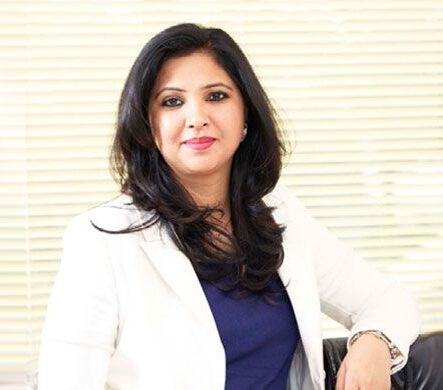
Ruchi Ahluwalia is chief people officer of Digitide Solutions Ltd.