

HR and business leaders must redesign work and empower talent to achieve meaningful ROI from AI deployment.
By Jason Averbrook
Enterprises have poured $30 to $40 billion into generative AI, and MIT research shows that 95% of organizations are getting little to no return on that investment. The obvious conclusion is that the technology isn’t ready. The actual conclusion is far more uncomfortable and far more human.
Mercer’s 2026 Global Talent Trends study, drawing on insights from nearly 12,000 C-suite executives, HR leaders, employees, and investors, paints a clear picture: The bottleneck to exponential performance isn’t the machine side of the equation. It’s the human side. And until organizations solve for that, every dollar spent on AI is at risk of underdelivering its intended value.
The Triple Misalignment
Consider the disconnect. C-suite leaders rank redesigning work to incorporate AI and automation as their top priority for delivering ROI in 2026, with 63% putting it at the top of the list. Investors agree, at 67%. But HR leaders? Only 46% plan to prioritize it, ranking it fifth on their to-do list. Instead, HR’s top priority is enhancing employee experience and employee value proposition, a worthy goal that, without connection to work redesign and business outcomes, risks becoming an isolated effort with limited impact.
Meanwhile, the people expected to deliver all this transformation are running on empty. Employee thriving sits at 44%, the lowest rate in the study’s 10-year history, down sharply from 66% in 2024. Satisfaction has fallen sharply, and 40% of employees are actively planning to leave their organization in the next 12 months. Burned out, demotivated people cannot deliver a transformational agenda, and the productivity gains leaders expect from technology will be short-lived without a thriving workforce behind them.
Automating Dysfunction
Here’s the uncomfortable truth most boardrooms aren’t ready to hear: bolting AI onto broken systems doesn’t fix the systems. It accelerates existing inefficiency.
Mercer’s data bears this out. Among HR teams, 57% have implemented chatbots, but only one in five says this has driven significant value. Only a quarter report that automating HR processes has delivered meaningful ROI. That’s what happens when organizations put a new tool on top of an old process and expect positive outcomes.
The pattern repeats across the enterprise. AI adoption is highest in transactional areas like help desk queries and benefits enrollment, while business-critical applications like work redesign (25%), strategic workforce planning (25%), and predictive talent development (23%) remain largely untouched.
The lesson is straightforward: transformation starts with redesigning the work itself. Instead of asking “how can AI improve this existing process,” the better question is “what work actually needs to be done, and what’s the best combination of human and machine capability to do it?”
The Skills Equation
The human-machine equation has a skills variable that most organizations are getting wrong. Employees feel it acutely: 53% worry about lacking future-ready skills, and concern about skill relevance has surged from 17% in 2024 to 47% in 2026. That anxiety is rational, not irrational, because the skills ground is shifting under everyone’s feet.
And yet, only half of C-suite leaders believe current investment is sufficient to close the skills gaps they expect to face tomorrow. Talent intelligence systems are built to hire people, not develop them, according to 46% of leaders. Just one in three organizations has a talent marketplace. Career progression remains tenure-based for nearly half of employees. These are systems designed for a world that no longer exists.
Solving the human-machine equation requires organizations to think about transformation as a complete system, not a technology project. Mindset has to shift before tools can deliver value. Under conditions of sustained pressure and uncertainty, adoption of new ways of working becomes more challenging. Skills must evolve continuously, not in annual training cycles. And only then does the toolset, the AI, the automation, the digital infrastructure, become a multiplier rather than an expensive ornament.
HR’s Make-or-Break Moment
If solving the human-machine equation is the challenge of 2026, then HR’s reinvention is the prerequisite. Organizations where HR is embedded in strategic decision-making report 76% higher workforce resilience and 78% better talent competitiveness. And 81% of investors say embedding HR into strategic decision-making is essential for driving growth.
Only 8% of C-suite leaders and 10% of HR leaders describe HR as an embedded strategic function today. The most common description, from both groups, is “operational partner.” That’s reactive.
The path forward demands that HR stop looking in the mirror and start looking through the window. That means shifting from managing people operations to architecting the system of work, from measuring process compliance to enabling performance outcomes, and from running a support function to owning how humans and machines work together. It also means merging HR and IT capabilities, something 56% of HR leaders and 60% of C-suite leaders already anticipate happening.
Structural change without a digital mindset behind it is just rearranging furniture. The Global Talent Trends data reveals a striking awareness-action gap: 75% of leaders say their organization needs to be more digital to compete, yet only 30% rate their digital agility as high. Nearly three-quarters agree AI fluency will matter as much as financial literacy for executives within two years, but only 36% consider it important to leadership success today. Leaders see the destination clearly but remain early in the journey.
This is where the operating model conversation gets real. Legacy HR models were built for compliance, not intelligence. Three-quarters of HR functions still run on the three-pillar model that has served the profession for 30 years but was designed for a fundamentally different era. What comes next is a reinvention, one where technology serves as the connective tissue between people, data, and systems, where HR and IT function as a single capability rather than two departments exchanging tickets, and where the entire structure orients around business outcomes rather than process delivery. Only 13% of C-suite leaders see HR technology as a transformation leader today. In two years, 36% expect it to be driving enterprise-wide transformation. Closing that gap demands a fundamentally different operating mindset, one that treats digital fluency not as a nice-to-have leadership attribute but as the foundational capability that makes everything else possible.
The Equation That Matters
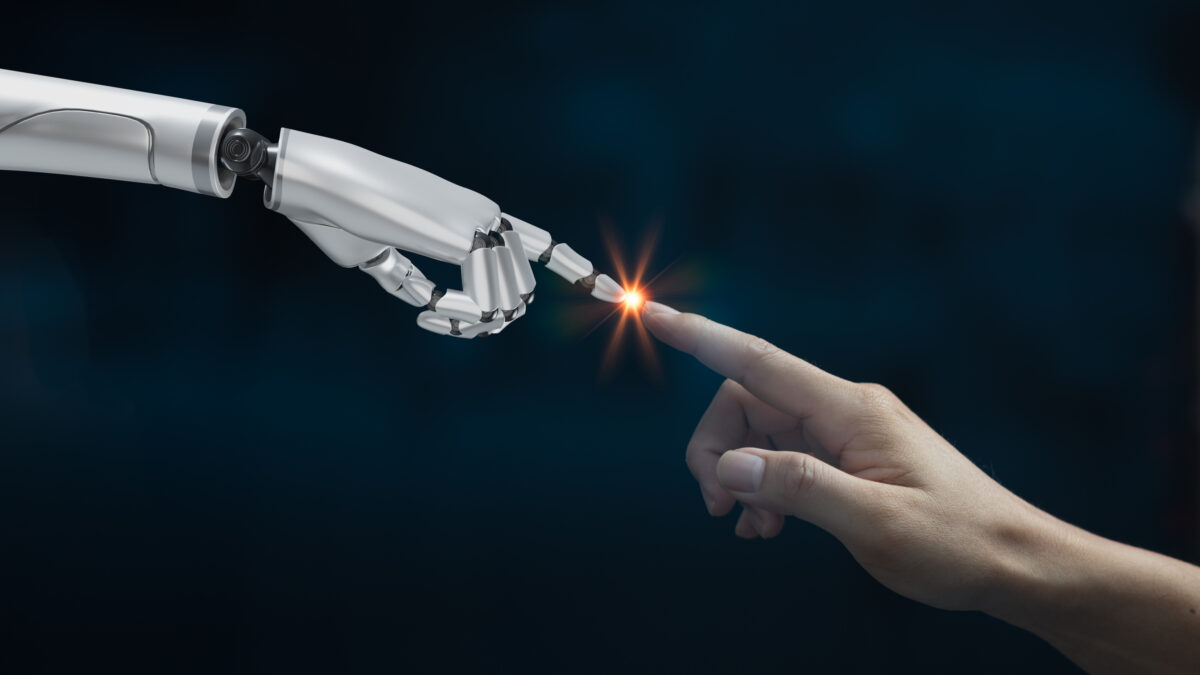
Exponential performance will come from organizations that solve the full equation: intentional work redesign, dynamic skills intelligence, a recalibrated value exchange between employer and employee, and an HR function that has reinvented both its operating model and its mindset for a world where human and machine capability must be orchestrated as one system.
The stakes couldn’t be clearer, as 98% of executives plan organizational design changes over the next two years. The question is whether this transformation will be intentional, human-centered, and built to last, or whether it will be another expensive round of layering frosting on moldy cake.
The math only works when both sides of the equation are solved together. And solving the human side starts with the belief that it matters as much as the machine side. That belief, more than any technology investment, is what separates organizations that will thrive from those that won’t.
Jason Averbook is senior partner and global leader of digital HR strategy at Mercer.