


As HR teams brace for a year of dynamic changes, including competing priorities and smaller budgets, Lattice’s 2026 State of People Strategy Report highlights a focus on performance management, employee engagement, and the integration of advanced technologies, including agentic AI.
“This year’s report makes one thing clear: it’s back to business basics. HR is at the center of today’s most critical opportunities: driving performance, engaging people, and adopting AI responsibly,” says Sarah Franklin, CEO of Lattice. “The most effective leaders aren’t using AI to replace people, but to embrace what makes us human—scaling creativity, ingenuity, and diverse perspectives. At Lattice, we’re committed to helping HR move beyond efficiency to effectiveness, giving people superpowers and making work meaningful for everyone.”
Performance management has emerged as the top priority for 40% of HR teams globally, closely followed by employee engagement (39%). As organizations demand greater accountability from their HR functions, this shift reflects the challenges of balancing performance and engagement in light of strategic pivots toward measurable outcomes.
“Performance and engagement should not be opposites, they fuel each other and should be well-balanced,” says Stéphanie Fraise, CHRO at OpenClassrooms, one of the largest online education and training platforms in Europe. “Favoring one at the expense of another creates short-term wins but long-term erosion.”
The survey uncovers notable regional variations in HR priorities. European teams show equal focus on engagement and learning and development (both at 36%), while also being twice as likely as their U.S. counterparts to prioritize DEIB initiatives (24% vs. 11%).
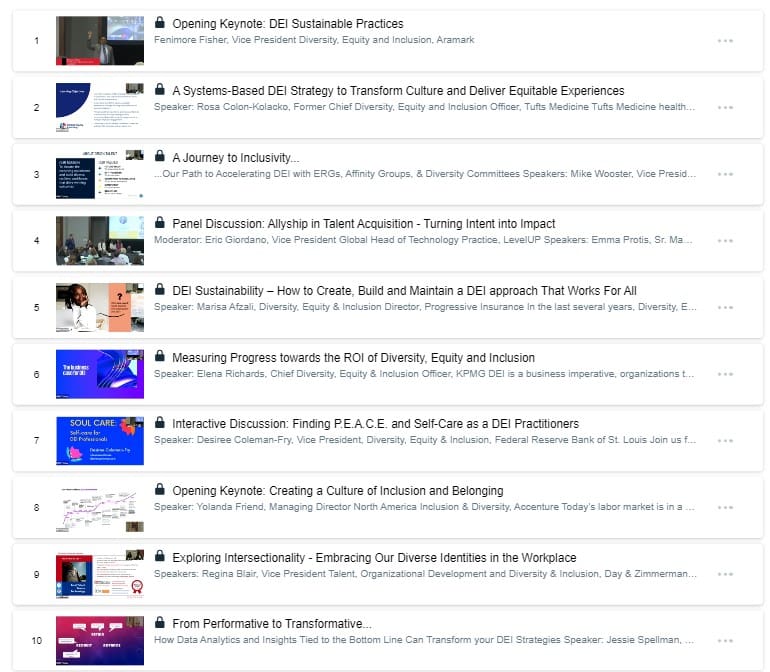
However, DEIB as a global priority has declined significantly, with only 16% of teams focusing on it in 2026, down from a peak of 30% in 2023. Despite this shift, 61% of HR teams with dedicated DEIB roles plan to maintain them, and the highest-performing HR teams are five times as likely to prioritize DEIB.
The report highlights that decreasing budgets as a focus on performance management have led organizations to deprioritize DEIB efforts. This polarization has become significant, with 32% of HR leaders reporting feeling stuck managing different viewpoints of employees and leaders who don’t see eye-to-eye on DEIB.
The report reveals a clear correlation between technology adoption and team performance, with 72% of high-performing teams using four or more specialized HR tools compared to an average of three tools across all respondents.
Generational attitudes toward technology vary significantly, as 53% of Gen Z actively seeks out new tech, 58% of Gen X requires proof before trying new tools, and 56% of baby boomers believe tech reduces human connection.
Despite these differences, AI adoption is gaining momentum across all age groups, with 42% of white-collar HR professionals already using agentic AI regularly. Remarkably, a combined 83% of HR professionals express excitement, hope, or optimism about outsourcing tasks to agentic AI, even as 61% maintain ethical concerns.
Regina Ross, EVP and chief people and operations officer at Opportunity Finance Network, notes that running low-risk pilots will help teams test new AI-enabled tools and scale what works while investing budget wisely. But beyond implementation, HR teams needs to set their sights on facilitating tech and AI-readiness, says Ross, “to reimagine their roles as strategic enablers supported by technology, rather than sidelined by it.”
The report observes there is a shift at a macro-level focused on proactive, continuous talent management as part of a broader cultural revolution in cross-organizational alignment – and that AI drives momentum behind the shift.
In the US, several factors have caused nearly half (48%) of US HR practitioners to consider leaving the field — compared to just 31% in Europe. However, overall engagement remains stable at 78%, with 79% feeling confident in their job security. The primary drivers for considering departure include the emotional toll of managing employee issues, feeling undervalued, and work-life balance challenges.
As organizations navigate an increasingly complex landscape of evolving dynamics, one truth remains constant: resilient leaders help their people and businesses succeed by defining what culture, engagement, and human connection look like now and in the future.
AI and emerging technologies are transforming how teams operate, and the most forward-thinking organizations are using these tools not to replace the human touch, but to scale it, creating more opportunities for strategic, transparent, and meaningful work.