

|
Getting your Trinity Audio player ready...
|
2025 Q4 Global Labor Market Report Overview
What is the state of the global labor market?
Geopolitical tensions and lagging economic growth have weakened the global labor market. Unemployment continues to fluctuate but is high in advanced economies and among women and youth.
What is affecting the global economy?
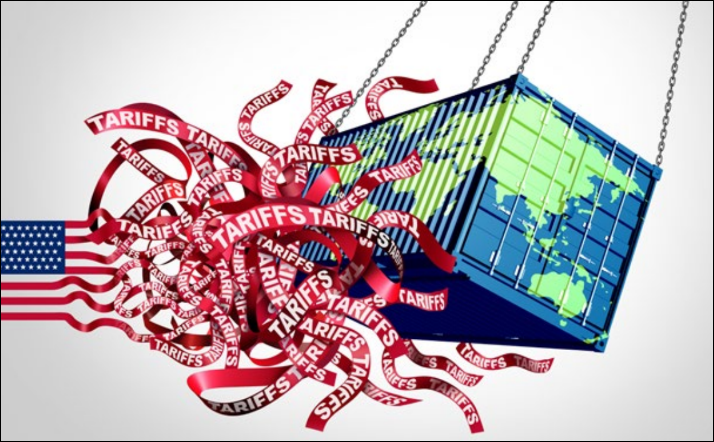
Slow trade, unstable international supply chain management, and weakened consumer demand continue wreaking havoc on the global economy. The volatility of the US-imposed tariffs, historically, could lead to rising unemployment rates and lower inflation worldwide.
Regional Overview:
- North America: The United States did not meet predicted economic growth in the fourth quarter, partially due to lower domestic spending and the 43-day government shutdown. According to revised data, only 181,000 jobs were added throughout 2025. Canada’s economy shrank as manufacturing fell dramatically. Despite minimal job growth, Canadian unemployment decreased.
- Asia Pacific: Technology-based investments and exports fueled APAC’s economic growth. China faced its slowest quarterly growth since 2022. Japan’s economy expanded amid rising domestic demand. India continued its robust economic growth as real estate and services thrived. Unemployment varied, though the region struggles with youth unemployment.
- Europe, Middle East, and Africa: The euro area’s economy expanded as headline inflation finally began to cool. Germany’s economy was supported by private and government consumption as US-imposed tariffs negatively affected net exports. Unemployment throughout the region mostly improved, especially in Turkey.
- Latin America: Latin America’s economic growth exceeded original predictions. Inflation has cooled considerably. Upcoming elections are expected to stunt economic growth as administrations shift. Brazil’s growth is expected to decelerate throughout 2026. In Mexico, the peso continues to appreciate as manufacturing helps drive growth. Unemployment in Brazil hit another record low. Formal employment initiatives are positively impacting job growth and unemployment.
Fourth Quarter Spotlight: The Olympic Impact on Job Growth
The 2026 Winter Olympic Games in Milan and Cortina d’Ampezzo provided employment to locals and an economic boost to the region. In addition to funding initiatives that will propel future growth, like improving accessibility and electricity distribution, the Games also gave EU countries examples of how to stay compliant with the Pay Transparency Directive set to implement in June 2026.
Looking Forward to 2026:
Initial growth predictions were high as the global economy was predicted to expand by 2.6% in 2026 due to cooling inflation and high growth in emerging and developing markets. However, recent events, including March’s missile strikes on Iran and the Supreme Court’s ruling on global tariffs, have certainly changed growth expectations. Economies, governments, and corporations are likely preparing for prolonged economic instability amid skyrocketing geopolitical tensions. The overall effects of these events will be further explored in reports published throughout 2026.
Download the full report to learn more about the global economy, international labor market, and the impact of the Olympic Games.