

Strategies for building a workforce that’s ready for what’s next.
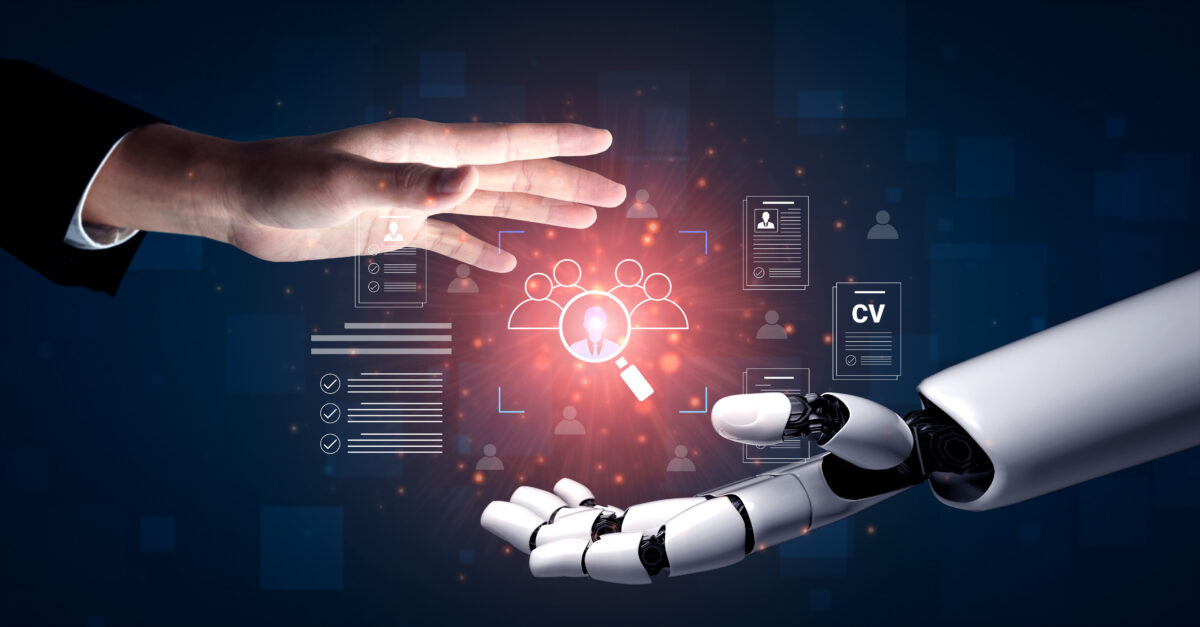
For many workplaces, AI adoption is already part of everyday employee experiences. Gallup finds that 52% of U.S. employees now use AI in their role, posing a more important question for HR leaders: What will that broader adoption mean for the workforce over the long term?
Instead of measuring the value of AI transformation by reduced costs or restructured roles, it should be measured by how effectively it enables employees to spend less time on routine tasks and more time applying their expertise to higher-value work. AI will change what work gets done and how, but that does not diminish the value of human expertise. At the core, workforce transformation is now evolving to focus on redesigning work and increasing human capacity, not simply reducing the amount of labor.
AI can unlock value by helping employees think more strategically about a program or business challenge. When used as a thought partner, AI can help explore a new concept, surface different perspectives, or test potential approaches. The true value then comes from pairing that input with human judgement—questioning the feedback AI provides and determining how, or whether, it applies to the specific business challenge.
Human Expertise is Becoming More Valuable
It’s been touted that AI can increasingly handle execution; however, understanding the business process around a task actually becomes more important. Coaching employees to understand the behind-the-scenes of how technology, workflows, and business outcomes connect allows businesses to clearly identify where AI is improving a process, and not only where human judgment is needed, but where it adds more value to differentiate.

PwC recently found that roles where AI automates routine work while increasing the importance of human judgment and expertise are seeing twice the growth in available jobs and 42% faster salary growth than roles where AI primarily makes work easier for non-experts. At the same time, Microsoft found 66% of AI users say AI allows them to spend more time on high-value work. For example, within business operations functions, AI can extract data from an invoice or route a document, but people are still needed to handle exceptions, apply business context, and make judgement calls. The more routine work technology takes on, the more important it becomes to have employees who understand how the process works and where human intervention matters most.
Technology Investment Requires Talent Investment
To date, leaders have been focused on buying and deploying AI tools, though that is only one piece of AI transformation. Employees need the training, skills, and confidence to adopt and navigate these tools that will change how they work. These trainings should go beyond operational instructions for a particular AI tool and incorporate broader AI literacy and best practices for responsible use.
According to IBM, 71% of CHROs say the ability to supervise, validate, and override AI output is the workforce’s most essential skill, while only 29% of employees rank judgement as important. This stark gap reinforces the idea that reskilling needs to be as deliberate as the technology investment itself.
66% of AI users say AI allows them to spend more time on high-value work.
One approach is to identify internal AI champions who can support adoption and coach employees based on how they are using the technology. That can mean helping non-users identify where AI could solve a problem, while guiding frequent users on more effective model selection and usage. Regular office hours and dedicated internal channels can also give employees space to ask questions and learn through experimentation.
Build Adaptability into the Workforce, Not Just AI Skills
Given the speed at which LLMs and AI tools are evolving, workforce readiness cannot be treated as a one-and-done training exercise.
Instead, leaders need to create ongoing opportunities for employees to experiment with AI in their actual work, amplify successful use cases, and learn from each other about what works and what doesn’t. This also creates an important role for managers to identify employees who can naturally connect business expertise, technology, and change management, and then give them the opportunities to expand on those capabilities.
The need for this kind of continuous adaptation is clear: 85% of leaders say workforce adaptability is critical, but only 7% believe their organizations are leading in helping their employees continuously grow and adapt, according to Deloitte. Ultimately, the goal is to create a workforce that is capable of evolving alongside the technology, instead of constantly playing catch-up.
The Future of AI Is Still Human
There’s no doubt AI is changing the workforce. Individual tasks are evolving and will eventually reshape entire roles. This shift creates an opportunity to foster employees whose business knowledge, judgement, and ability to lead through change become more valuable as technology improves. The companies that invest as intentionally in the people working alongside AI as they do in the technology itself will be better positioned to turn AI adoption into meaningful workforce transformation.