



AI is being lauded for saving time and boosting productivity, but HR leaders should take heed when deciding how to deploy it.
By Gillian Manning
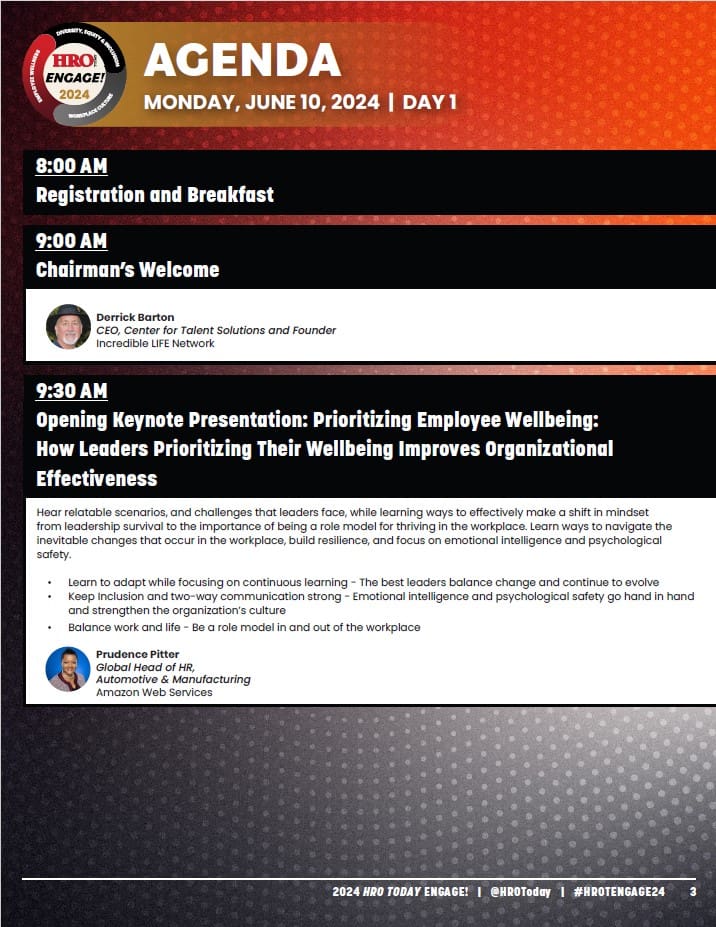
As businesses rapidly adjust to and adopt AI, leaders in HR face a challenge: differentiating when to use AI, and when it’s best to set it aside. For Prudence Pitter, an HR veteran with 29 years of experience in the field and the founder of PEARRM Services, solving this equation requires a fundamental reevaluation of how organizations protect their “bench strength.” In practice, protecting that bench strength means understanding how burnout and disengagement undermine the retention and succession planning that AI can’t do—these things need the human touch.
Addressing Employee Burnout
The increasing amount of automation that’s being integrated into organizations has created a hyper-connected workplace where boundaries are increasingly blurred. Pitter explains that this rapid shift is taking a significant toll on employee mental health.
“AI is moving faster than we can catch up,” she says. “I go to bed every night thinking, ‘Did I leave anything undone?’ That is not a smart question to ask, not when you have AI available to you.”
But the challenge lies in providing boundaries and guidance. Employees need to have a clear understanding of when to leverage generative AI tools, and there needs to be a clear strategy around technology. “You must ensure that you are not setting your employees up for burnout,” she says.

Founder
PEARRM Services
This feeds into a seven-year crisis, Pitter describes, in which stress and burnout have been major corporate topics, and yet, burnout rates aren’t falling. Pitter explains that, while corporate leadership frequently flags wellness as a top priority, the execution often misses the mark.
“We are not seeing burnout starting to fall; we are seeing burnout rise,” she says. “Organizations and leaders are prioritizing employee well-being, but sometimes not in the ways that help the organization move the needle.”
The shift to remote and hybrid environments has compounded the issue, adding to the pressure to remain accessible. “[I]ndividuals have this need to always be on. You don’t have this individual physically over your shoulder, but God forbid you’re at the yoga studio and your Slack is ringing.”
To combat this burnout-inducing culture, leadership must step up as authentic role models rather than distant figures. AI can’t play a role here. Pitter strongly advocates for practices like skip-level meetings—where a senior leader meets directly with employees who report to their direct reports—to bridge the gap . “This helps leaders become more human to the people who don’t have enough visibility to them, and it allows them to tell their story,” she says.
Leaders must openly demonstrate how they manage their own boundaries to help employees understand the expectations of the organization. When leadership openly models and shares how they practice work-life balance, it provides a practical framework—and permission—for employees and can help combat burnout.
When well-being is ignored, the consequences eventually become apparent in talent retention and succession. Data from Aflac indicates that 72% of employees face moderate to high work stress. This metric, Pitter explains, highlights how important it is for employees to take time off.
Building a Resilient Succession Framework
Today’s greater retention risk emphasizes the need for succession planning, which can’t be outsourced to AI. Pitter explains that when CEOs realize there’s a severe lack of bench strength, companies tend to hire externally, which can reduce institutional knowledge. Instead, fixing the pipeline requires leaders to differentiate between top performers and critical talent. Pitter suggests a simple diagnostic question: Who in your organization, if they stepped away tomorrow, would cause a significant structural shift or system breakage within 90 days?
Pitter says, “I hear stories about an executive secretary who is the only one who knows how everything works, or a part-time retiree who holds deep institutional knowledge about data anomalies and milestones. If they leave fully to enjoy retirement, the organization is in a world of pain. Once you identify these specific examples of individuals who would cause things to break if they stepped away, you start to get traction and attention from your leadership teams.”
Transparency is also a key factor in succession discussions. Keeping pipelines a secret can lead to anxiety and detachment, whereas open communication builds loyalty among the workforce.
“I have worked with an organization that does succession planning secretly,” Pitter shares. “An individual might find out they are on a succession plan because all of a sudden they get an executive coach, or they get invited to a big event, but they have not been explicitly told they are on the plan. Don’t do that. I encourage you to make sure that succession planning is transparent. The individual who is being developed for more in the organization should absolutely know.”
Without the knowledge that they’re being developed, employees may look for growth opportunities elsewhere, not knowing that the opportunity is right in front of them.
“Focus on what AI cannot do and continue to tell those stories within your organization. The culture within your organization is likely unique, and you must ensure that you preserve that because there is no way for AI to do that.”
Maintaining Human Connection
The boundary between what can be automated and what should remain human is distinct. Culture and authentic relationship-building can’t be outsourced to technology. “Focus on what AI cannot do, and continue to tell those stories within your organization,” Pitter emphasizes. “The culture within your organization is likely unique, and you must ensure that you preserve that because there is no way for AI to do that.”
For HR executives looking to make a meaningful impact over the next 30 days, Pitter provides five immediate, actionable steps.
- Audit before automating any tasks or processes, ensuring that technology is only applied where it is strictly necessary.
-
Prioritize connection by actively breaking down organizational silos.
-
Begin succession planning immediately, even if that means starting with just one individual.
-
Reframe well-being as a foundational mechanism that solidifies the organization and drives a strong bottom line.
-
Build a rigorous ROI case to ensure continuous executive investment.
By blending leadership continuity with a holistic approach to well-being, organizations can secure their futures in an automated world.