



|
Getting your Trinity Audio player ready...
|
Five CHROs share advice on how to architect professional and personal success.
By Debbie Bolla
It’s 2026—HR isn’t Toby from The Office anymore; it’s a strategic driver of business performance.
When I asked senior HR leaders to describe how their roles and responsibilities have shifted in the last few years, in their responses include:
-
a strategic stakeholder;
-
an architect of enterprise value; and
-
a strategist and workforce architect.
The AI implosion, continuous business uncertainty, data-driven decision-making, and growing employee expectations have accelerated HR’s position to be at the epicenter of business success.
“Today’s HR leaders sit at the intersection of strategy, work design, skills, and performance,” notes Lisa Sterling, chief people officer of Perceptyx. “We are responsible for ensuring the organization can adapt faster than the market, deploy talent more intelligently, and protect productivity while avoiding burnout. This shift demands HR leaders who can speak fluently about revenue, cost, and risk while translating people decisions directly into business outcomes.”
Today’s market conditions call for agility in everything HR does: workforce planning, hiring, tech integrations, engagement practices, and overall decision-making. “The HR leader’s role has become more strategic and more visible than ever, helping the organization adapt, compete, and grow through its people,” says Amy Cappellanti-Wolf, EVP and chief people officer of Dayforce. She says as AI reshapes workforces, HR leaders are tasked with understanding how technology changes roles and the skills employees need to evolve with them.
“CHROs have shifted from HR functional leaders to enterprise leaders, now central to business strategy, culture, and digital transformation,” says Patty Johns, chief people and culture officer of Meridian™. With this in mind, Johns says that modern CHROs have no shortage of priorities on their plates, including facing regulatory complexity, talent shortages, rapid tech change, and shifting employee expectations around well-being, flexibility, and purpose.
Chief People Officer Andrew Dawson says as HR has evolved, so have their approaches. At BVI, this is multifold:
-
their current talent strategy is aligned with global expansion;
-
their leadership capabilities are supported through change; and
-
well-being is embedded in how work is designed with a holistic view in mind.
“To implement new HR-focused AI initiatives, the HR leader needs to understand the tech to a greater detail than ever before, including how AI will impact their role, their business, their employees.” —Kendrick Russell, CHRO for UMC
What’s AI’s Role?
At the core, AI should free up HR leaders from their repetitive transactional work to have more time to address strategic decision-making, workforce intelligence, and system design. But, as many have learned, transitioning to AI technologies is far from simple and comes with a bevy of change management needs, essentially redesigning how workforces operate.
“CHROs are now architects of ‘human and AI’ workforces, redesigning roles, upskilling talent, and working with IT and data to govern ethical AI use,” explains Johns. “HR must lead AI adoption across the enterprise, not just within HR.”
Cappellanti-Wolf says AI has the power to advance how the workforce operates and that calls for strong, overarching governance, falling on the hands of HR. “HR leaders are helping the organization understand the impact on roles, skills, and workforce models. They’re driving reskilling efforts, supporting leaders through change, and ensuring employees are prepared for evolving demands,” she explains.
AI adoption continues to accelerate at an increasingly fast pace, with research showing that 78% of organizations now leverage at least one form of AI, and the market for AI in the workplace is projected to expand from $303 billion in 2025 to more than $421 billion by the end 2026.
With this market growth, HR leaders have to make key considerations when electing AI technologies. “To implement new HR-focused AI initiatives, the HR leader needs to understand the tech to a greater detail than ever before, including how AI will impact their role, their business, their employees,” says Kendrick Russell, chief human resources officer for UMC.
Sterling agrees, asserting that AI forces HR leaders to answer hard questions, including the following.
-
What work truly creates value?
-
What should be done by humans versus agents?
-
How do organizations redeploy talent, not just replace it?
“When leveraged correctly, AI enables HR leaders to drive productivity gains, faster time-to-impact, smarter workforce planning, and better performance outcomes,” she explains. “This isn’t about efficiency, it’s about competitive advantage.”
Efficiency indeed—it’s a main promise of AI. Johns says she anticipates between 20% and 30% efficiency gains as AI transforms HR operations. For example, Meridian is implementing an “AskHR Chatbot,” a self-service tool to provide employees with real-time responses to HR policy and procedure questions, freeing up time for the entire HR team.
Another key benefit that’s delivered by AI is better data and workforce analytics. This is a real game changer that goes beyond efficiency. “With better data intel, HR leaders can anticipate skills gaps, identify rotation risks, and personalize development pathways,” says Dawson. “The opportunity is to pair these insights with governance and human-centered leadership.”
Cappellanti-Wolf agrees that AI provides better access to data that can be leveraged for business intelligence. “Deeper insights into skills, capacity, engagement, and performance allow HR to inform workforce strategy with greater precision and speed,” she notes.
Reducing Burnout
Burnout isn’t coming; it’s here. It reared its ugly head during the pandemic, but during that time, most HR leaders had to focus their energy on supporting employees. Now it’s time for HR leaders support themselves because the numbers say it all: Research finds 98% of HR professionals report burnout symptoms.
“For senior HR leaders, the strain is amplified by the scope of the role, balancing business transformation, workforce challenges, and rising employee expectations while often serving as the organization’s steady hand during disruption,” says Cappellanti-Wolf.
Dawson agrees. “HR often carries both operational demands and an emotional piece, by supporting employees while advising the executive team through uncertainty. Organizations that recognize HR as a strategic function must also resource it appropriately, ensuring clear priorities and shared accountability at the executive level,” he says.
In addition to ensuring proper resources and distributing responsibilities, Sterling advises rethinking how work is done and recommends smarter operating models and more simplified processes.
And HR also needs to take the advice it is often giving others.
“To manage stress and burnout, it’s important to deliver results, but also to make work-life balance a priority,” says Johns. “My advice is to use your vacation days and spread them out throughout the year. Be there for important family moments because you can’t get the time back. Make your health a priority. If you don’t do this, no one else will do it for you.”
A focus on mental health is also a key piece of the puzzle. “Participate in therapy. Sometimes we can’t see the forest for the trees. Thus, having access to that neutral person who is trained to help you navigate stress, anxiety, burnout, etc., can be a game changer. Most importantly, take time to enjoy life outside of work,” recommends Russell.
“HR often carries both operational demands and an emotional piece, by supporting employees while advising the executive team through uncertainty. Organizations that recognize HR as a strategic function must also resource it appropriately, ensuring clear priorities and shared accountability at the executive level.” —Andrew Dawson, CPO for BVI
What’s Next?
The current state for many senior HR leaders likely feels like a double-edge sword: They have been asking for a seat at the table for years and now they are basically the head of the table. How can leaders continue to thrive in their new roles and responsibilities?
“The answer isn’t doing more; it’s learning to do it differently,” says Sterling.
Prioritize. Not everything can be done at once because simply, there are only so many hours in a day. Cappellanti-Wolf recommends streamlining processes by removing unnecessary approvals, and reassessing legacy programs that add complexity without clear return. “As HR’s workload expands, leaders need to be explicit about what truly advances the business and give themselves permission to pause or eliminate lower-value work,” she says.
Dawson agrees, adding it’s important to clarify strategic priorities and let go of non-essential initiatives.
Communicate. “It’s easy to retreat and focus solely on the expansion of duties, but that can easily lead to forgetting about others who need you,” says Russell. “I always make it a point to keep communicating, scheduling time to be available to those who need me, even though my plate may be more full than ever.”
Optimize. HR leaders should consider the old adage of working smarter rather than harder. “Taking on more work forces an HR leader to delegate appropriately and find ways to do former tasks more efficiently,” explains Russell. “Being a Lean Six Sigma Green Belt, I am always looking to identify waste in processes, so my team is efficient as possible, build capacity to take on new things, such as AI.”
Johns says, “Like other parts of the organization, HR must improve its own operational efficiency, leverage AI and automation to shift toward more strategic tasks, and stop work that no longer adds value.” Dawson agrees that leveraging AI for transactional work will help HR focus on high-value advisory roles.
“Modern HR leadership isn’t about doing more for people,” notes Sterling. “It’s become vital to design systems where people and the business can win together.”
MEET THE EXPERTS

Amy Cappellanti-Wolf
EVP and chief people officer
Dayforce
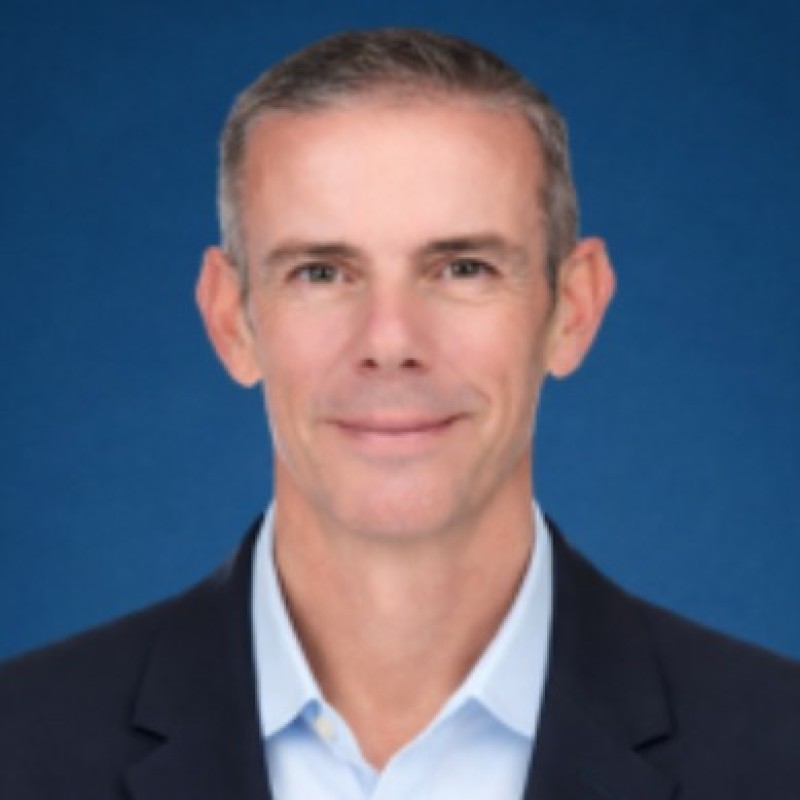
Andrew Dawson
Chief People Officer
BVI

Patty Johns
Chief People and Culture Officer
Meridian™.

Kendrick “Ricky” Russell
Chief Human Resources Officer
UMC

Lisa Sterling
Chief People Officer
Perceptyx