

Here’s how employers can ensure they’re hiring the most qualified candidate amid a sea of AI-enhanced resumes.
By Bart Lautenbach
The plight of the modern recruiter? Every resume is “perfect.”
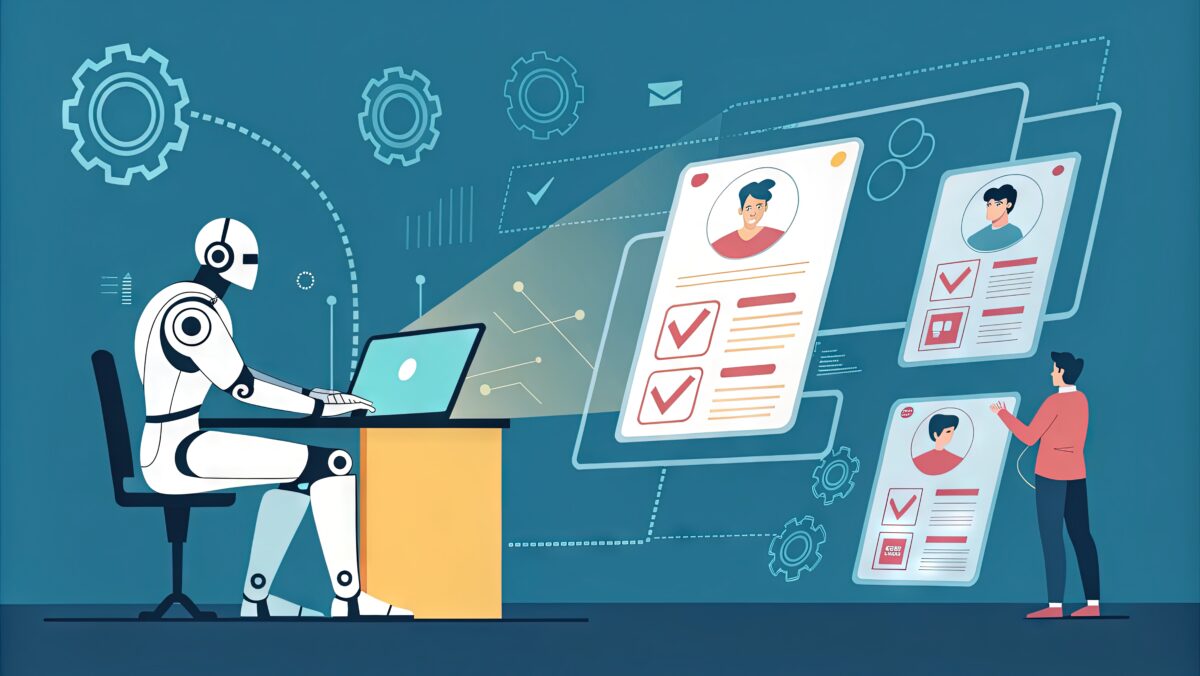
AI is transforming how candidates present themselves. Job seekers have become almost instantly able to update their resumes to match any open role by using AI-powered tools that analyze a specific job description, then update the candidate’s existing experience to align perfectly. In some sense, this levels the playing field for applicants by helping ensure that qualified candidates aren’t missed by strict applicant tracking system (ATS) filters.
This efficiency may come at a cost, though. When every candidate’s resume is tailored exactly to the job description, there may be a higher risk of inflated or misleading credentials, possibly making it harder — or nearly impossible — for TA leaders to discern genuine, deep experience and qualifications versus AI-enhanced accounts.
The solution isn’t to fight AI, but to balance efficiency with authenticity. To help better ensure that they’re making informed decisions, hiring teams should consider using technology and situational knowledge to help re-establish the important connection between a candidate’s resume and their true capabilities.
Consider this challenge. AI tools are able to analyze job descriptions and identify exact key words, required skills, and competencies for a given role. If, for example, a company posts an opening for a vice president of talent acquisition proficient in data-driven recruiting metrics, an applicant with relevant experience, maybe a capable director who lacks true VP-level experience, could feed their resume and the job description into an AI tool. The tool may generate bullet points like “established a predictive analytics framework for global talent forecasting” or “led multinational transformation of HRIS system.”
The updated, AI-enhanced resume may not necessarily be a deliberate lie, but it could be an elevated articulation of the job description’s requirements that makes the candidate’s past work sound just like the senior role’s demands. And if the majority of resumes for a competitive role look almost identical in their alignment with the job description, human judgment can be hindered. Hiring teams might spend valuable time interviewing unsuitable candidates, which could lead to lost productivity, or even poor hiring decisions that could lead to a costly increase in turnover.
Connecting the Dots with Situational Knowledge
The more traditional method of resume review, or simply reading a claim and taking it at face value, may not fit the needs of modern hiring teams. Now, HR professionals should consider a more active candidate review process, confirming or testing the claims on resumes by assessing the underlying context and knowledge that can accompany it.
To move farther into the context of a candidate’s resume, hiring teams can map their claimed history to the situational knowledge they should have acquired in a given role. Going back to the example of the vice president of talent acquisition, if a candidate claimed to have led a multinational transformation of an HRIS system, an employer should be able to map that scope to specific skills and knowledge they acquired.
In an interview, an employer could ask about the integration challenges that candidate faced when mapping disparate regional employee records into a singular new platform. A candidate with genuine experience would be able to reference specific governance models, speak about integration architecture, and identify regulatory hurdles. A candidate whose resume was heavily optimized by AI may stick to vague generalities or related buzzwords, which could reveal that they lack the depth of knowledge expected from their resume. This process can help connect the dots between a polished resume and the reality of a candidate’s professional history.
A Critical Step in the Hiring Process: Background Screening
While asking specific questions to learn about a candidate’s experience is crucial for early-stage vetting, the hiring process is often incomplete without the guardrail of background screening. Trust and integrity are essential in hiring, and verifying past employment and education to help identify potential inconsistencies is typically essential.
This is even more important as AI continues to transform how candidates present themselves. And since 71% of HR professionals have encountered fabricated or misleading candidate information, according to an Equifax survey, verifying previous employment and education with background checks can help increase an employer’s confidence that a candidate has the experience they say they do.
Completing background checks that verify education and previous employment and comparing that data against a candidate’s resume may also help confirm trust in a new hire. The ability to verify that a candidate did work in their previous role for the amount of time they claimed to can not only help employers better confirm a candidate’s integrity, but also make it easier to hire that person more quickly.
The age of the AI-perfected resume requires a pivot from simple reading of candidate claims to verification through situational knowledge and background checks. Hiring teams don’t need to fear the use of automation and technology in their hiring processes, but use it to their advantage to access more authentic, fact-based data and balance efficiency with authenticity.
Bart Lautenbach is the senior vice president and general manager, talent solutions at Equifax Workforce Solutions.